 HoloHolo Guide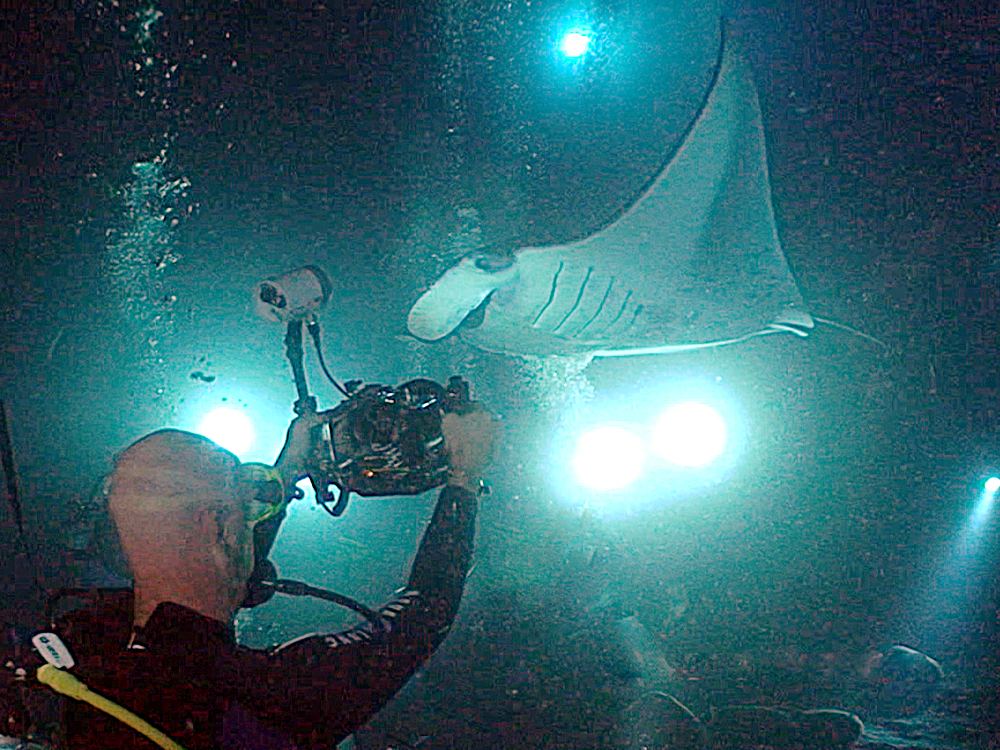
The verdict by trip style
Snorkel — Fair Wind, Keauhou Bay
4.7 stars across 261 reviews, 1.5 hours, warm soup after. No certification, no extra cost, and the mantas come to you.
Check availability →Dive — Aquatic Life Divers, Honokohau
Perfect 5.0 from 72 reviews, max 14 divers, one-tank night dive. Bring your certification card.
Check availability →Still deciding? Compare live availability for both options side by side:
Compare manta ray tours on ViatorFree cancellation on most listings · Prices confirmed at booking
The thing nobody tells you: snorkelers get the better view
Here's the contrarian truth the dive shops won't lead with: the mantas feed at the surface, not the bottom. The whole encounter works because lights attract plankton, and plankton rises toward light. Snorkelers hold a floating light board that shines down into the water — the plankton gathers in that column of light, and the mantas barrel-roll up from the depths to feed directly beneath the snorkelers, sometimes inches below the board.
Divers sit on the ocean floor at 30–40 feet looking up. It's dramatic — mantas silhouetted against the surface, swooping overhead. But the feeding action, the part where a 12-foot ray does a slow barrel roll three feet from your face, happens up where the snorkelers are. Kona Honu Divers, who run both versions daily, describe the snorkel view as a "bird's-eye view of their graceful dance" with mantas "just a few feet beneath you" — and note both are front-row seats. The honest read: the snorkel isn't the consolation prize. It's the main event with a lower ticket price.
Snorkel vs dive: the full comparison
| Night snorkel | Night dive | |
|---|---|---|
| Certification | None needed | Open Water Diver or higher (card checked) |
| Typical price | ~$130–$265/adult + ~$15–20 fees | ~$200+/seat, plus certification if you don't have it |
| Certification cost | $0 | $600–$1,000+ and 3–4 days in Kona |
| Your position | Floating at the surface, holding a light board | Kneeling on sand at 30–40 ft around the "campfire" of lights |
| Perspective | Top-down: the whole feeding scene below you | Bottom-up: mantas silhouetted overhead |
| Proximity | Mantas feed inches beneath the board | Mantas swoop overhead, sometimes inches away |
| Duration in water | ~45 minutes | ~45–60 minutes bottom time |
| Minimum age | ~6 (varies by operator) | 10+ with junior certification |
| Best for | Everyone, families, non-divers, nervous swimmers | Already-certified divers who want the full immersion |
What the dive is actually like
If you are certified, the dive is genuinely spectacular — just different, not better. You descend after dark to a sandy patch at Manta Heaven or Manta Village, settle into a circle with the other divers, and the divemaster places the lights in the center. Operators call it the campfire. Then you wait, breathing slowly, while 10- to 16-foot mantas materialize out of the black water and loop through the light beams above your head. Divers consistently call it a top-five lifetime dive. It also gets you access to slightly deeper sites and behaviors the surface crowd doesn't see. If diving is already your thing, this is the night dive against which you'll measure all others.
Who should pick which
Pick the snorkel if: you're not certified (obviously), you're traveling with kids or mixed-ability groups, you're a nervous swimmer, you want the best photos (surface light is kinder than 40 feet of dark water), or you'd rather spend the $600+ certification budget on literally anything else in Hawaii. Once you've decided, compare the best manta ray night snorkel tours in Kona — 5 operators rated by group size, departure point, price, and re-ride policy.
Pick the dive if: you're already Open Water certified or higher, you've done night dives before and love them, or the bottom-up "cathedral of mantas" shot is specifically the thing you came for.
Don't do this: don't start a 3–4 day certification course mid-vacation just to qualify for the dive. You'll burn half your Big Island days in a classroom and pool to earn the right to pay more for a view of the same animals the snorkelers are watching from above. Get certified at home if diving calls to you — then come back and do the manta dive as a certified diver.
The safety fine print (it's genuinely safe)
Manta rays are filter feeders with no teeth, no stinger, and no barb — unlike their stingray cousins, they have no way to hurt you (Kona Honu Divers). They're curious but indifferent to humans; you're scenery. The real risks are the ordinary ocean ones: getting cold (wetsuits are provided — night water runs mid-70s°F), seasickness on the ride out, and mask leaks. Take Dramamine if you're prone, and bring a warm layer for the boat ride back.