 HoloHolo Guide
The evening, minute by minute
Most first timers picture swimming around in dark open ocean looking for rays. That is not what happens. The manta ray night snorkel in Kona is closer to floating in one place above a stage while the show comes to you. Here is the shape of the night, operator by operator, so there are no surprises left by the time you step on the boat.
| Step | When | What actually happens |
|---|---|---|
| Check in and gear up | 30 to 45 minutes before departure | You arrive at the harbor in your swimsuit, sign in, and get fitted for a wetsuit, mask and snorkel. WanderHawaii puts check in at 30 to 45 minutes before sunset, and Coral Reef Snorkel Adventures asks guests to arrive at least 30 minutes early at Honokohau Harbor for fitting and the safety briefing. |
| The boat ride out | 5 to 30 minutes | Short. WanderHawaii lists 5 to 15 minutes to the site for most Kona boats. Coral Reef Snorkel Adventures lists 20 to 30 minutes, depending on which manta site the captain chooses that night. Sunset departures get the sunset, and sometimes the green flash, on the way out. |
| The briefing in the water | At the site | The crew sets the light board, explains the no touching rule, and a guide gets in first. Kona Snorkel Trips builds in an educational briefing on manta biology and the history of the Kona rays before anyone swims. |
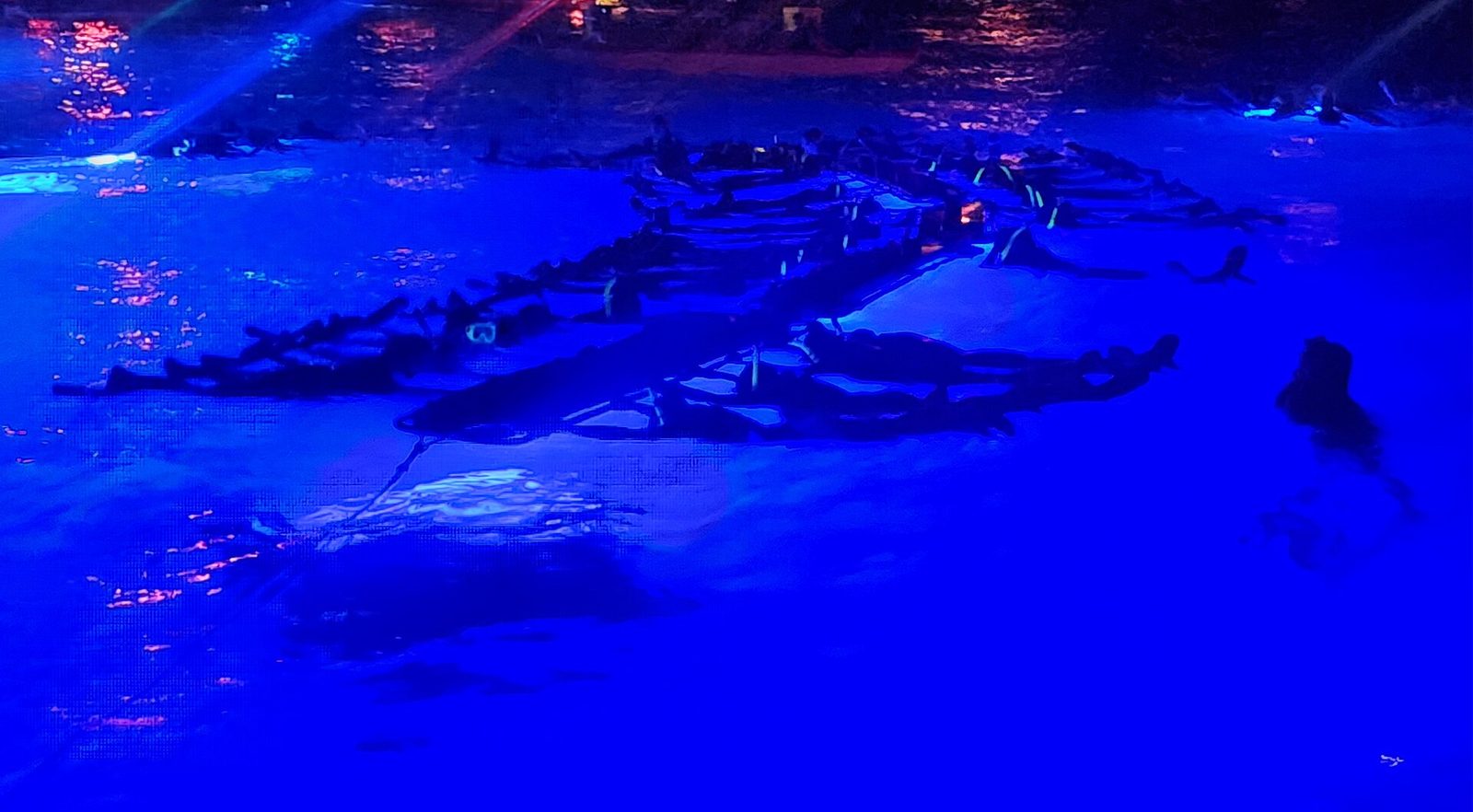
| Floating at the board | 30 to 45 minutes | You climb down the ladder, take a short swim to the board, hold on, put a foam noodle under your ankles, and float face down. The lights pull in plankton, the plankton pulls in mantas, and the mantas barrel roll and loop mouth open directly below your mask. |
| Back on the boat | About 2 hours after check in | You climb the ladder, peel off the wetsuit, and ride back with hot cocoa, tea or snacks on many boats. Coral Reef Snorkel Adventures lists the whole tour at 2 hours, with up to 45 minutes of that in the water. |
What the water part really feels like
The water below you is 20 to 30 feet deep, according to WanderHawaii, but you never leave the surface. Guides stay in the water with the group the whole time, Kona Snorkel Trips and Coral Reef Snorkel Adventures both put lifeguard certified or in water guides on every trip. That one fact settles most first timer nerves. You are not diving, you are not treading water, and you are not swimming laps in the dark. You hold a board, a noodle floats your legs up behind you, and the wetsuit adds buoyancy of its own. Kona Snorkel Trips describes its guests spending 45 minutes as spectators at the board. Coral Reef Snorkel Adventures is blunt about why the setup works: a life jacket would float you upright with your feet dangling down, which is exactly the position that kicks mantas, so the board and noodle replace it.
The temperature surprises people more than the dark does. WanderHawaii puts the water at 75 to 80 degrees Fahrenheit, and after 30 or more still minutes that feels cool, which is why every operator in this guide includes a wetsuit and why reviewers on Viator keep advising a dry towel and a warm layer for the ride back.
Then the mantas arrive. Wingspans run up to 16 feet on WanderHawaii and up to 17 feet on the Coral Reef Snorkel Adventures listing. On a good night WanderHawaii counts 5 to 15 different mantas, while Kona Snorkel Trips counts 1 to 10 or more. They feed in loops, mouths open, passing within inches of your mask, close enough that guides identify individual animals by the spot pattern on each belly, a pattern Kona Snorkel Trips compares to a human fingerprint. The animals have no teeth and no stingers, a fact every operator repeats, because they are plankton feeders and you are not on the menu in any sense.
The rules nobody warns you about in advance
Four rules shape the night, and first timers do better knowing them at booking, not at the harbor.
You must be able to swim, and operators define that precisely. Coral Reef Snorkel Adventures requires a comfortable 25 yard ocean swim without a life jacket, caps weight at 270 pounds, sets ages at 7 to 70, runs a maximum of 12 guests, and needs a minimum of 6 guests before the boat goes at all. Kona Snorkel Trips requires competent swimmers comfortable in deep water and sets its floor at age 5 with an adult. If you do not meet the swim bar, the honest alternative is a ride along seat on the boat, which several operators sell for less than a snorkel seat.
No fins. Coral Reef Snorkel Adventures bans fins outright, because you float at the board rather than swim, and a fin kick can strike a manta below you. Bring your own mask and snorkel if you like, and leave the fins at the hotel.
No touching, ever. The mantas carry a protective mucus coating, and human contact damages it and can pass bacteria to the animal. Guides can remove a guest who reaches for a ray, per the Coral Reef Snorkel Adventures wildlife guidelines. The mantas come to you. Stillness is the whole skill.
Cameras stay close. A waterproof camera is welcome if it stays tight to your body and you can still hold the board and float flat while using it. Selfie sticks and extendable poles stay on the boat, because a manta cannot see well directly in front of itself. Coral Reef Snorkel Adventures rents a GoPro with a memory card for 50 dollars if you would rather not risk your own gear.
Early boat or late boat, the first timer call
This is the decision first timers agonize over, and the operators themselves split it cleanly. Coral Reef Snorkel Adventures says the later it gets, the darker it is, and the darkest tours tend to pull the most plankton to the lights and the most mantas to the plankton, with smaller crowds as a bonus. The same operator says the early sunset tours are the right pick for beginners, kids and anyone nervous about being in the ocean after dark, because some twilight remains when you get in.
So the call is about which worry is bigger. If the dark itself worries you, sunset slot. If a quiet night with no mantas worries you more, late slot, and book it early in your trip so the free rebook still has somewhere to land. Our fuller safety walkthrough answers whether the manta ray night snorkel in Kona is safe for nervous swimmers and parents, and our seasonality guide covers the best time of year for the manta ray night snorkel in Kona if your dates are still flexible.
Which boat suits a first timer
| Operator | Price | Group | Harbor and site | Why a first timer picks it |
|---|---|---|---|---|
| Coral Reef Snorkel Adventures | From 125 dollars | 12 guests maximum, 6 minimum | Honokohau Harbor | The small group teaching boat, 2 hours total, up to 45 minutes in the water, 92 percent sighting rate on its own listing, free rebook if no mantas show |
| Snorkel Big Island | From 137 dollars | 6 guests maximum | Honokohau Harbor | The smallest group in this guide, rated 4.7 with a Badge of Excellence on Viator, so the guide can watch every first timer individually |
| Sea Paradise | From 141 dollars | 49 guests | Keauhou Bay, Manta Village | The easiest logistics, a 10 to 15 minute ride to Manta Village, 45 minutes in the water, hot chocolate after, and a free rebook if the mantas skip your night |
| Fair Wind | From 160 dollars | Larger boat | Keauhou Bay, Manta Village | The comfort pick, rated 4.7 across 261 reviews on Viator, 1.5 hours, warm soup after the swim |
Coral Reef Snorkel Adventures
The operator the first timer recon kept surfacing. Twelve guests maximum from Honokohau Harbor, 2 hours door to door, up to 45 minutes at the light board, and the clearest published rules in the field, a 25 yard swim requirement and a free rebook at a 92 percent sighting rate. From 125 dollars on Viator.
Check Coral Reef Snorkel Adventures availability on Viator →Snorkel Big Island
Six guests maximum from Honokohau Harbor, rated 4.7 with a Badge of Excellence. If being one of six instead of one of forty is what will calm you down, this is your boat. From 137 dollars.
Check Snorkel Big Island availability on Viator →Sea Paradise
The Keauhou Bay boat with the short ride, the big stable deck and the rebook guarantee. Forty five minutes in the water and hot chocolate on the way back. From 141 dollars.
Check Sea Paradise availability on Viator →Fair Wind
The Keauhou Bay alternative with a 4.7 rating across 261 reviews, a 1.5 hour trip and warm soup after. From 160 dollars.
Check Fair Wind availability on Viator →First time bottom line: Book early in your trip, take the sunset slot if the dark worries you, and pick a boat whose rebook promise is in writing.
Check Coral Reef Snorkel Adventures availability on ViatorFree cancellation on most listings · Prices confirmed at booking
The mistakes first timers actually make
Booking the manta night last. Tours sell out days ahead according to Coral Reef Snorkel Adventures, and a no show rebook needs an open night after yours. Put this tour in the first half of the trip, every time.
Taking seasickness medication on the boat. Coral Reef Snorkel Adventures says to take it 30 minutes to 1 hour before departure, because once you feel sick on the boat it is too late for the medication to help. The ride is short, but the floating can roll you gently for 45 minutes.
Expecting to swim to the mantas. You do not chase anything. Splashing and kicking can push mantas away, and the guides will ask you to settle. Flat, still and quiet is what brings a 16 foot animal within inches of your face.
Skipping the wetsuit because Hawaii is warm. The water sits in the mid to high 70s and you are motionless in it for up to 45 minutes. Take the wetsuit, and bring the warm layer for the ride home.
Where this fits in your Big Island week
This page is the walkthrough. The buying decision lives one step up, in our comparison of the best manta ray night snorkel tours in Kona, which ranks every major operator by price, group size, harbor and rebook policy. If you are still torn between formats, read the manta ray snorkel versus dive comparison for Kona, and if you are wondering whether a boat is needed at all, read our answer to whether you need a tour for manta ray snorkeling in Kona. The Big Island hub collects every Big Island guide, and the perfect 7 day Hawaii itinerary shows the night most travelers slot the mantas into, early in the trip, with a spare night behind it for the rebook.